Samburu National Reserve

kenya's arid frontier of rare and rugged wildlife
Explore the arid and rugged landscapes of northern Kenya along the Ewaso Ng’iro River; this guide highlights unique regional wildlife species including the Grevy’s zebra and reticulated giraffe, prime game-viewing circuits, cultural encounters, and essential park logistics.

165 km²

Reserve area (64 sq mi)

1962

National reserve established

450+

Bird species recorded

Home of the Samburu Special Five

Samburu National Reserve lies in Samburu County, roughly 320–350 km (about a 5–6 hour drive) north of Nairobi, along the southern bank of the Ewaso Nyiro River — “brown water” in the local language, and the only permanent water source in this semi-arid landscape. First protected in 1948 as part of the larger Marsabit National Reserve, Samburu became its own reserve in 1962 with funding from the Elsa Trust, named for the lioness raised nearby by conservationists George and Joy Adamson.

What sets Samburu apart is its collection of dry-country wildlife found almost nowhere else in Kenya, collectively known as the “Samburu Special Five”: Grevy’s zebra, reticulated giraffe, gerenuk, Beisa oryx, and Somali ostrich. Together with the neighbouring Buffalo Springs and Shaba National Reserves — separated only by the river, and often visited on a single ticket — Samburu forms a rugged, little-visited ecosystem of doum palm groves, riverine forest, and open acacia scrub.

Samburu is also a genuine hub for wildlife research: Save the Elephants, founded by Dr. Iain Douglas-Hamilton, is headquartered here, alongside the Ewaso Lions Project and the Grevy’s Zebra Trust — making a Samburu visit as much a window into ongoing conservation science as a safari.
samburu national reserve

Life along the Ewaso Nyiro, through the seasons

Tap a season on the loop to see how conditions shift along Samburu's lifeline river.

December – March

A warm, dry interlude

Warm, mostly dry conditions with wildlife already fairly concentrated near the river — a good-value window with fewer visitors than the peak season.

Good to know: night game drives aren’t permitted inside Samburu National Reserve itself, but several bordering community conservancies, including Kalama, do offer them — worth asking about if nocturnal species are on your list.
Who you'll meet along the river

Samburu’s real draw isn’t sheer numbers — it’s rarity. The “Special Five” and a genuine research-driven elephant population make this one of Kenya’s most distinctive safari destinations.

Grevy's Zebra

Reticulated Giraffe

Gerenuk

Beisa Oryx

Somali Ostrich

Special Five
Grevy's Zebra
Equus grevyi
The world’s largest wild equid and critically endangered, identifiable by its narrow stripes and oversized, rounded ears.
Special Five
Reticulated Giraffe
Giraffa reticulata
Named for its striking, net-like coat pattern, this giraffe subspecies is found only in northern Kenya and parts of Somalia and Ethiopia.
Special Five
Gerenuk
Litocranius walleri
This long-necked antelope browses standing upright on its hind legs, reaching foliage other grazers can’t.
Special Five
Beisa Oryx
Oryx beisa
A striking, pale antelope with long straight horns, perfectly adapted to Samburu’s open, dry terrain.
Special Five
Somali Ostrich
Struthio molybdophanes
Distinguished from the common ostrich by its blue-grey neck and legs, this species is restricted to the Horn of Africa and northern Kenya.
Predator
Lion
Panthera leo
Several resident prides range along the river and open plains, frequently seen on game drives.
Predator
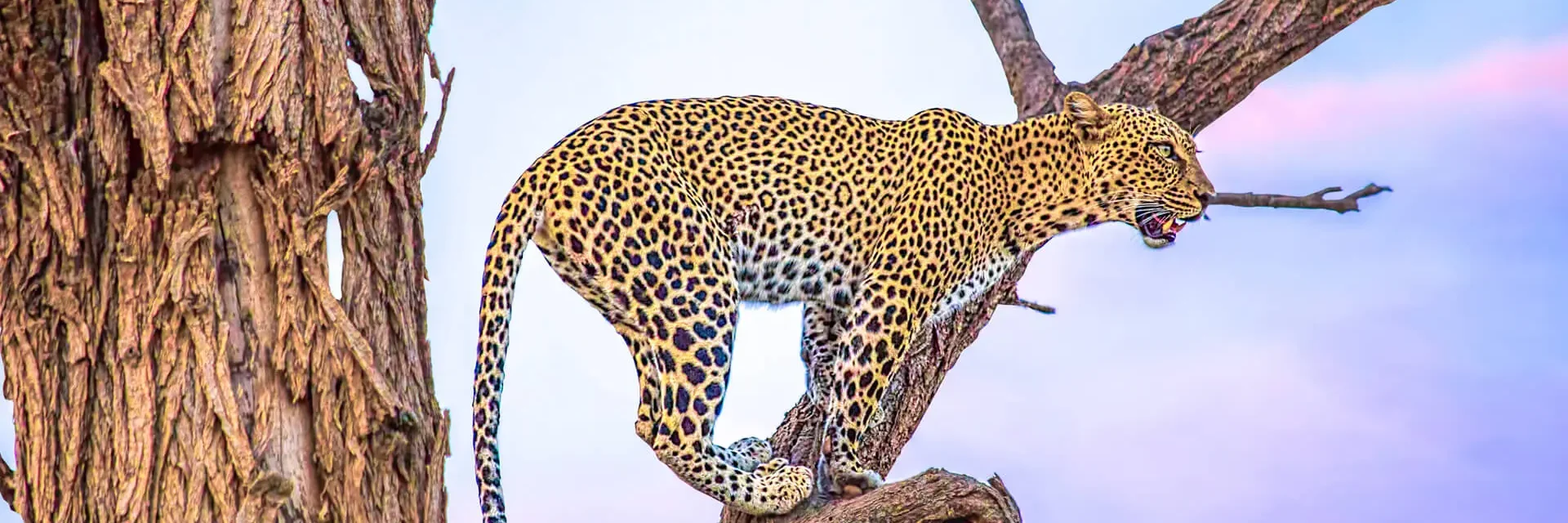
Leopard
Panthera pardus
Samburu is considered one of the best places in Kenya to see leopard, thanks to low visitor numbers and dense riverine cover.
Predator
Cheetah
Acinonyx jubatus
Hunts gazelles and dik-diks across Samburu’s open plains, with sightings reported fairly frequently.
Herbivore
African Bush Elephant
Loxodonta africana
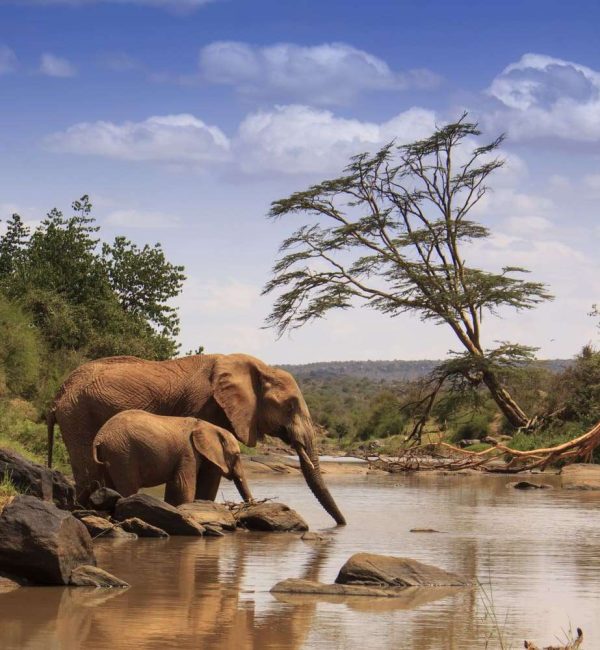
Large herds bathe and cross the Ewaso Nyiro regularly, with over 100 individuals GPS-collared and studied by Save the Elephants, headquartered here.
River wildlife
Nile Crocodile
Crocodylus niloticus
Frequently seen basking on the riverbanks or lying in wait as animals come to drink.
Birdlife
450+ Bird Species
—
The striking vulturine guineafowl, with its iridescent blue plumage, has become something of an emblem for Samburu’s exceptional birdlife.
Landscape feature
Ewaso Nyiro River
—
Fed by Mount Kenya’s glaciers, this is the reserve’s only permanent water source and the lifeline for virtually all its wildlife.

Four faces of Samburu

The wider Samburu ecosystem divides into distinct areas — pick a focus depending on what you’re after.
samburu national reserve
01

Ewaso Nyiro Riverine Forest

Doum palm groves and dense riparian woodland along the river, where elephants bathe, crocodiles bask, and leopards rest in the shade.

BEST FOR: ELEPHANTS · LEOPARDS
02

Open Plains & Acacia Scrub

Drier country away from the river, and the best habitat for the Samburu Special Five — Grevy's zebra, gerenuk, oryx, and more.

BEST FOR: SPECIAL FIVE SIGHTINGS
03

Buffalo Springs & Shaba

Sister reserves across the river, often visited on the same ticket, adding natural springs and volcanic terrain to the itinerary.

BEST FOR: EXTENDING THE VISIT · VARIETY
04

Kalama & Community Conservancies

Bordering the reserve, these community-run conservancies offer night drives, walking safaris, and cultural experiences like the Samburu Singing Wells not available inside the reserve itself.

BEST FOR: NIGHT DRIVES · CULTURAL IMMERSION

When to visit

Samburu can be visited year-round, but the dry season concentrates wildlife along the river for the most reliable game viewing.
SeasonMonthsConditionsHighlights
Dry season / peak Jul - Oct Hot and dry — wildlife concentrates along the Ewaso Nyiro River. The most reliable game viewing of the year.
Short rains Nov Brief showers begin greening the landscape. Wildlife begins dispersing from the riverbanks; fewer visitors.
Dry transition Dec - Mar Warm and mostly dry between the rains. Good value, with wildlife already fairly concentrated near water.
Long rains Apr - May Heaviest rainfall of the year; some roads can be harder going. Lush scenery and the quietest, cheapest time to visit.
Green-up Jun Rains easing, landscape at its lushest. A good transitional window ahead of the dry-season peak.

Getting there & getting around

By air

  • Samburu and Kalama airstrips serve the reserve directly, roughly 45 minutes to 1 hour by air from Nairobi’s Wilson Airport.
  • The faster and more comfortable option given the reserve’s distance from Nairobi.

By road

  • Around 5–6 hours’ drive from Nairobi (roughly 320–350 km) via Isiolo and Archer’s Post, on a mix of tarmac and unpaved roads.
  • Often combined with Ol Pejeta Conservancy or Buffalo Springs and Shaba on the same route.

Main entry gates

  • Archer's Post GateMain entrance, closest to the town of Archer's Post
  • Samburu AirstripFly-in access point serving the reserve directly

Inside the reserve

  • Night game drives aren’t permitted inside the reserve itself, though several bordering conservancies do offer them.
  • Buffalo Springs and Shaba, across the river, are separate reserves with their own gates but are often visited on a combined ticket.
  • Off-road driving is generally discouraged to protect the fragile semi-arid vegetation.

Fees & rules, at a glance

Entry fees (non-resident foreign visitors)

  • Reserve entry fees for adults have generally sat in the roughly US $70 per person, per 24 hours range in recent years, sometimes covering combined access to Buffalo Springs and Shaba.
  • Fees are reviewed periodically — always confirm current pricing directly with your operator before budgeting a trip.
  • Most package safaris fold reserve fees into the overall itinerary price.

Park etiquette & rules

  • Stay inside your vehicle at all times except at designated picnic or rest areas.
  • Keep a respectful distance from wildlife, particularly elephants near the river.
  • Never feed or attempt to attract animals; keep noise to a minimum.
  • Respect Samburu communities and their conservancy land — photography of people or homesteads requires permission.

Where to stay

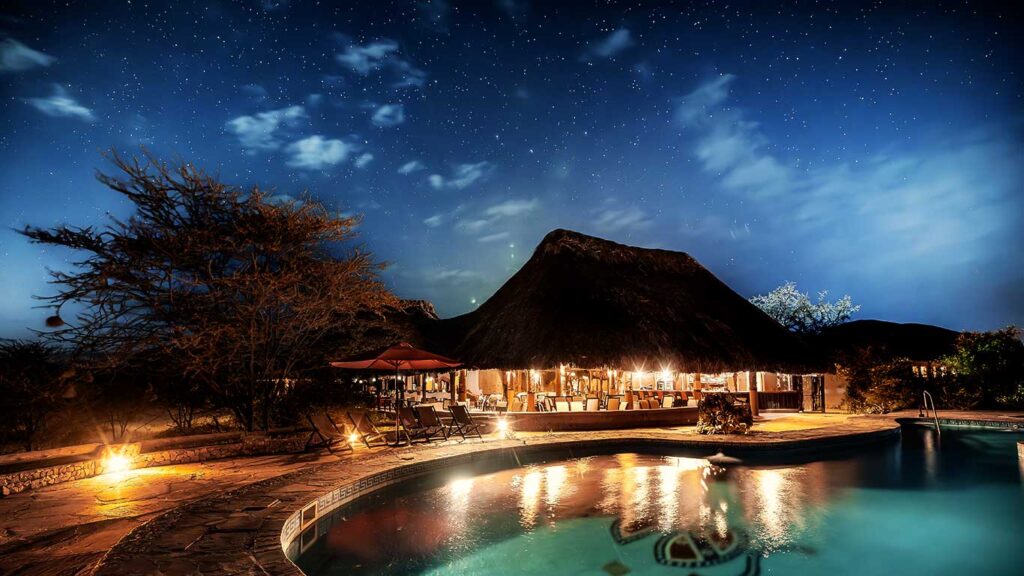
Camps and lodges here sit along the Ewaso Nyiro River, offering front-row views of elephants and other wildlife coming down to drink.
Select
Samburu Sopa Lodge
Samburu Sopa Lodge offers comfortable, full-board accommodation set along the Ewaso Nyiro River, with easy access to game drives across the reserve and its riverine forest.

Before you go

A few practical notes to help you prepare for a Samburu safari, from what to pack to what to expect on the ground.
What to pack
  • Neutral-toned, lightweight clothing — Samburu is hot and dry for most of the year.
  • A wide-brimmed hat, sunglasses, and high-SPF sunscreen — the sun here is intense with little shade away from the river.
  • Binoculars — especially useful for spotting the dry-country Special Five species.
  • A light layer for cooler early mornings, even in this generally warm climate.
  • Extra water and sun protection for any walking or cultural excursions.
Health & documents
  • A yellow fever vaccination certificate may be required depending on your travel history — check current Kenyan entry requirements before you fly.
  • Malaria risk is present in this lower-altitude region; consult a doctor about prophylaxis before departure.
  • A valid passport and Kenyan eTA/visa, arranged in advance according to current entry requirements.
  • Travel insurance that explicitly covers safari activities is recommended given the reserve’s remoteness.
Money & connectivity
  • US dollars (cash, newer notes) and international cards are both commonly used for fees and lodges — confirm accepted methods with your operator ahead of time.
  • Mobile signal is limited across much of the reserve.
  • Tipping guides and camp staff is customary; ask your operator for typical local guidance.
Getting the most from a visit
  • Ask about a night drive or Singing Wells cultural visit in one of the bordering community conservancies — neither is available inside the main reserve.
  • Combine with Buffalo Springs and Shaba for a fuller sense of the wider ecosystem, often on a single ticket.
  • Visit between July and October for the most reliable riverside game viewing.
  • Pair with Ol Pejeta Conservancy for a rounded northern Kenya itinerary combining rare dry-country species with rhino conservation.