Dutch
Dutch Spanish
 French
 Russian
 Chinese
Reserve area (583 sq mi)
National reserve status (first protected 1948)
Bird species recorded
The Maasai Mara National Reserve lies in Narok County, southwestern Kenya, directly contiguous with Tanzania’s Serengeti National Park across an unfenced border. Named for the Maasai people and the Maa word for the “spotted” appearance of its acacia-dotted plains, the area was first protected in 1948 as the Mara Triangle Game Sanctuary, then formally established as a national reserve in 1961 with its boundaries expanded eastward.
Unlike most of Kenya’s parks, the Mara isn’t managed by the Kenya Wildlife Service — governance is split between the Narok County Government, which oversees the main reserve, and the non-profit Mara Conservancy, which has managed the western Mara Triangle since 2001. Beyond the reserve itself, the wider Greater Mara ecosystem includes over a dozen community-run conservancies covering roughly 1,500 km² of buffer land, leased from Maasai landowners specifically for conservation and low-density tourism.
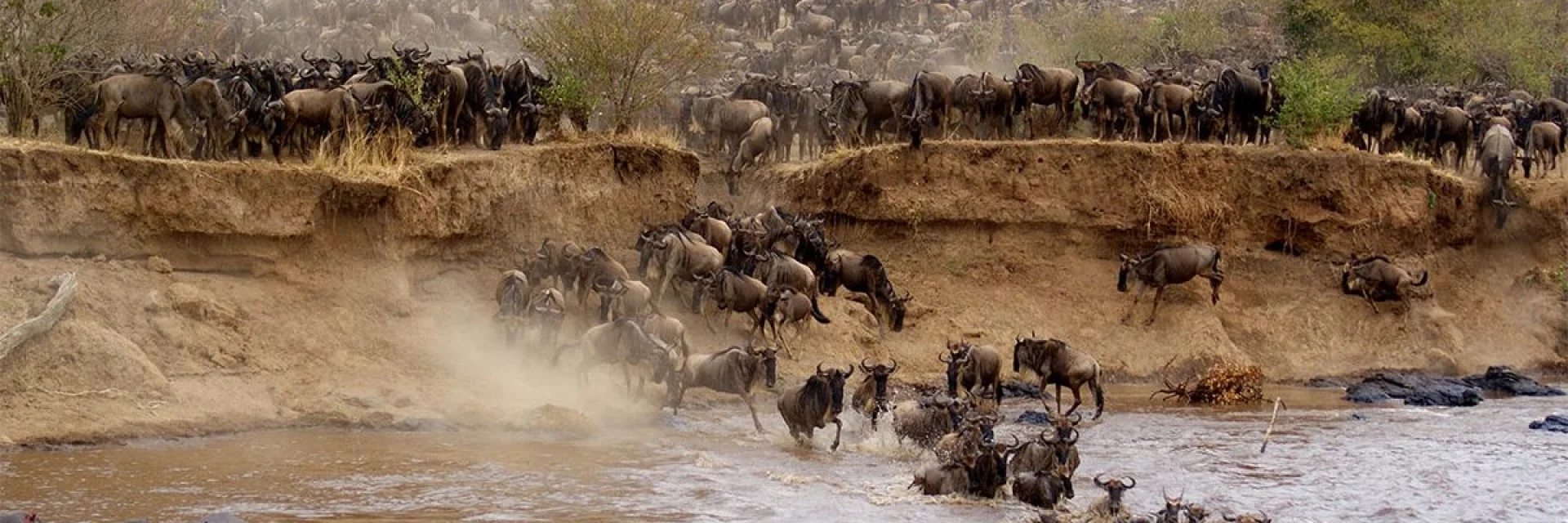
The Mara is world-famous as the stage for the final act of the Great Migration: each year between July and October, roughly 1.5 million wildebeest and hundreds of thousands of zebra cross the Mara River from the Serengeti in search of fresh grazing — one of the most dramatic wildlife spectacles on Earth.
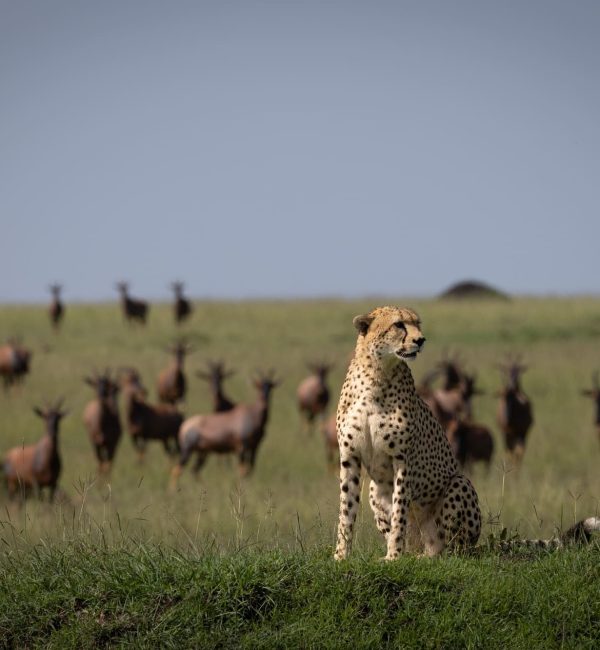
Tap a season on the loop to track the herds through their time on the Kenyan side of the ecosystem.
Following the rains north, the leading edge of the migration begins crossing into the Mara from the Serengeti's northern reaches, kicking off the reserve's busiest and most dramatic season.
Good to know: the migration follows rainfall, not the calendar — exact crossing timing shifts year to year, so treat the July–October window as a reliable range rather than a guarantee for any single date.
Managed separately by the non-profit Mara Conservancy, this western section between the Mara River and the Oloololo Escarpment holds some of the reserve's highest predator densities and the best river-crossing viewpoints.
The classic, most-visited heart of the Mara, with open plains, iconic wildlife density, and the greatest concentration of visitor traffic.
Private, community-run conservancies bordering the reserve, with strict visitor limits, exclusive access, and the freedom to offer night drives and walking safaris not permitted inside the reserve itself.
The reserve's southeastern reaches, following the Sand and Talek Rivers — quieter than the central plains, with good riverine wildlife and fewer vehicles.
| Season | Months | Conditions | Highlights |
|---|---|---|---|
| Migration season / peak | Jul - Oct | Dry and clear — the busiest and most expensive months of the year. | Mara River crossings and the highest wildlife concentrations of the year. |
| Short dry spell | Jan - Feb | Warm and mostly dry, between the rains. | Good resident-season game viewing with far fewer visitors than peak. |
| Long rains / green season | Mar - May | Heaviest rainfall of the year; lush, quiet, and much cheaper. | Excellent birding and newborn wildlife among resident herds. |
| Transition | Jun | Rains easing, grass shortening ahead of the migration's arrival. | A good-value window just before the migration crowds build. |
| Short rains | Nov - Dec | Brief afternoon showers as the migration heads back toward the Serengeti. | Migratory birds arrive; noticeably fewer visitors than peak season. |