Lake Nakuru National Park

the pink lake that became a rhino fortress
Discover the famous soda lake renowned for its dramatic flamingos, thriving populations of both black and white rhinos, and scenic woodland and cliff viewpoints; this guide details game viewing highlights, birdwatching seasons, and park access logistics.

188 km²

Park area (73 sq mi)

1968

Gazetted as a national park (Kenya's first rhino sanctuary, 1987)

450+

Bird species recorded

Kenya's first rhino sanctuary

Lake Nakuru National Park sits in the Great Rift Valley roughly 156 km (about a 2.5–3 hour drive) northwest of Nairobi, enclosing a shallow soda lake and its surrounding grassland and acacia woodland. The area was first protected as a bird sanctuary in 1961 to safeguard its globally significant flamingo population, extended to cover the whole lake in 1964, and formally gazetted as a national park in 1968.

In 1987, Lake Nakuru became Kenya’s first government-managed rhino sanctuary, following catastrophic poaching losses nationwide during the 1970s and 80s. The park is fully enclosed by a 188 km² electric fence — one of the first of its kind in Kenya — and today protects one of the country’s largest black and white rhino populations, alongside a successful Rothschild’s giraffe conservation programme.

Lake Nakuru is sometimes described as a “Big Five minus one” destination: with no resident elephants, its acacia woodland stays dense and largely intact, supporting tree-climbing lions, leopards, and the iconic flamingo flocks that gave the lake its fame — though flamingo numbers fluctuate significantly with water levels and algae blooms from year to year.
Lake Nakuru

Rhino and flamingo viewing through the seasons

Tap a season on the loop to see how conditions change for the lake's two biggest draws.

January – February

A brief dry spell

Clear, warm conditions make this a reliable window for both game drives and lakeshore birdwatching, with fewer visitors than the peak dry season.

Good to know: flamingo numbers on Lake Nakuru rise and fall dramatically with water levels and algae blooms — spectacular in some years, sparse in others, and never guaranteed on any single visit.
Who you'll meet on the lakeshore

With no resident elephants, Lake Nakuru’s dense acacia woodland stays largely intact, supporting an unusually high concentration of rhino, tree-climbing lions, and birdlife in a very compact park.

White Rhino

Black Rhino

Rothschild's Giraffe

Lesser Flamingo

Tree-climbing Lion

Conservation icon
White Rhino
Ceratotherium simum
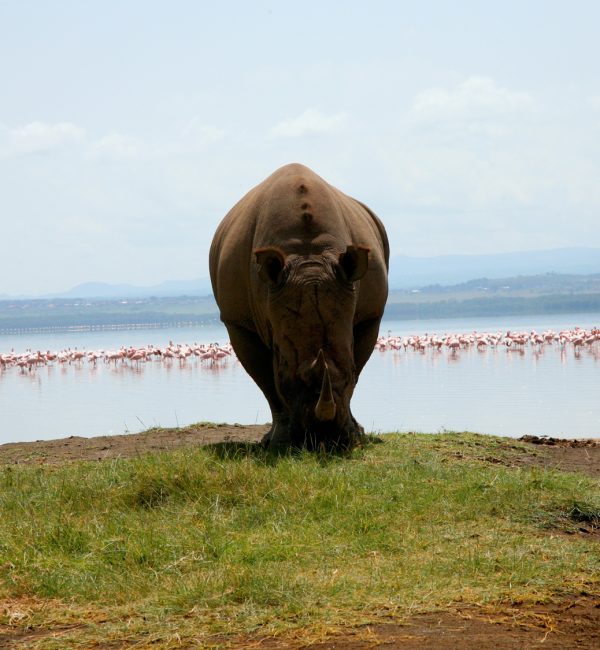
Around 150 rhinos live within the park’s fenced sanctuary, roughly 80% of them white rhino, regularly seen grazing in the open near the lakeshore.
Conservation icon
Black Rhino
Diceros bicornis
Kenya’s first rhino sanctuary, established here in 1987, now protects one of the country’s largest black rhino populations, though they remain shyer and harder to spot than their white cousins.
Predator
Lion
Panthera leo
Nakuru’s lions have developed the same unusual tree-climbing habit seen at Lake Manyara in Tanzania, often resting in acacia branches during the heat of the day.
Predator
Leopard
Panthera pardus
Present but elusive, favouring the park’s denser woodland and rocky escarpment areas.
Herbivore
Rothschild's Giraffe
Giraffa camelopardalis rothschildi
One of East Africa’s rarest giraffe subspecies, translocated here as part of a successful conservation programme that helped save it from extinction.
Herbivore
Cape Buffalo
Syncerus caffer
Large herds graze the grassland bordering the lake, part of the park’s “Big Five minus one” line-up.
Herbivore
Waterbuck
Kobus ellipsiprymnus
Common around the lakeshore and woodland edges, identifiable by the distinctive white ring on their rump.
Wetland birdlife
Lesser Flamingo
Phoeniconaias minor
The species that made Lake Nakuru famous — though numbers fluctuate hugely year to year depending on algae levels and water depth.
Wetland birdlife
Great White Pelican
Pelecanus onocrotalus
The lake is a significant breeding site for this large, striking waterbird.
Birdlife
450+ Bird Species
—
One of the richest birding sites in the Rift Valley, part of the UNESCO-listed Kenya Lake System.
Primate
Colobus & Vervet Monkeys
—
Both are commonly seen in the woodland areas, alongside troops of olive baboon on the rocky cliffs.
Landmark
Out of Africa Lookout
—
A viewpoint on Baboon Cliff offering sweeping views over the lake — named for the 1985 film partly shot in the area.

Four faces of Lake Nakuru

The park’s compact size hides real variety — pick a focus depending on what you want to see.
lake nakuru national park
01

The Lake Shore & Flamingo Flats

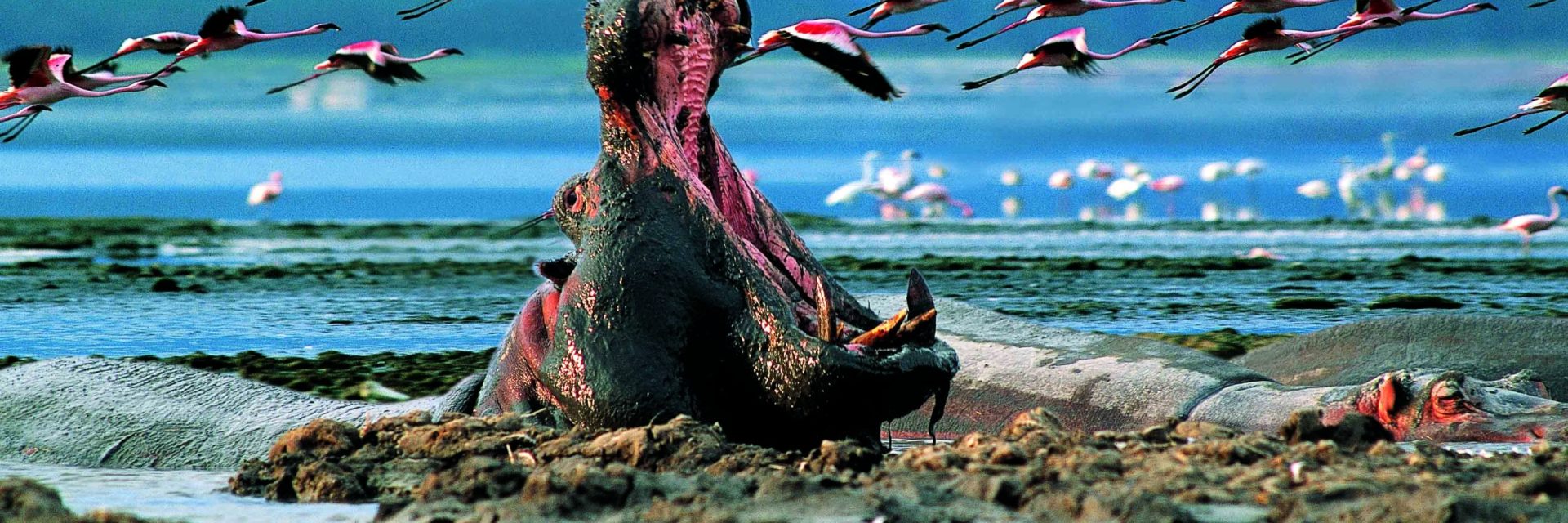
The shallow soda lake itself, where flamingos, pelicans, and other waterbirds gather in numbers that shift dramatically with water levels.

BEST FOR: BIRDLIFE · PHOTOGRAPHY
02

Rhino Sanctuary Plains

Open grassland where white rhino graze in the open and buffalo herds gather — the park's most reliable big-game viewing area.

BEST FOR: RHINO SIGHTINGS · BIG GAME
03

Acacia & Euphorbia Woodland

Dense forest free of elephant damage, home to tree-climbing lions, leopards, and troops of colobus and vervet monkeys.

BEST FOR: PREDATORS · PRIMATES
04

Baboon Cliff & Out of Africa Lookout

Escarpment viewpoints offering sweeping panoramas over the entire lake and park — one of the best photo stops in the Rift Valley.

BEST FOR: VIEWPOINTS · PHOTOGRAPHY

When to visit

Lake Nakuru’s mild, near-equatorial climate makes it a genuine year-round destination — the main trade-off is dry-season ease of access versus wetter, quieter, greener months.
SeasonMonthsConditionsHighlights
Dry season / peak Jul - Oct Dry and clear — easiest access on park roads. The most reliable general game viewing of the year, but also the busiest.
Short dry spell Jan - Feb A brief warm interlude between the rains. A quieter alternative to the peak season with similarly good conditions.
Long rains / green season Mar - May Heaviest rainfall of the year; lush scenery, some muddy tracks. Excellent birding and the quietest, cheapest time to visit.
Drying out Jun Rains easing, grass shortening. Visibility improving ahead of the dry-season peak.
Short rains Nov - Dec Brief afternoon showers, landscape greening up. Fewer visitors than the dry-season peak.

Getting there & getting around

By air

  • Naishi Airstrip, next to Naishi Guest House inside the park, serves charter and light-aircraft flights.
  • Most visitors reach Nakuru by road rather than air, given its proximity to Nairobi.

By road

  • Around 2.5–3 hours’ drive from Nairobi (roughly 156 km) via the A104, a tarmac road for the entire route.
  • Commonly combined with the Maasai Mara, Lake Naivasha, or a wider Rift Valley circuit.

Main entry gates

  • Main GatePrimary entrance, 4 km from Nakuru town centre
  • Lanet GateAccess point on the main Nairobi–Nakuru road
  • Nderit GateSouthern entrance, also reachable from the Nairobi–Nakuru road

Inside the park

  • Off-road driving is strictly prohibited; stay on established roads and trails at all times.
  • View wildlife from a minimum distance of 20 metres, and never feed or attempt to attract animals.
  • The park is fully fenced, so gate closing times are enforced — confirm current hours with KWS or your operator.

Park fees & rules, at a glance

Entry fees (non-resident foreign visitors)

  • Kenya Wildlife Service (KWS) rates for adults have generally sat in the roughly US $60–80 per person, per 24 hours range in recent years, with children discounted.
  • Rates and any applicable taxes are reviewed periodically — always confirm current pricing directly with KWS or your operator before budgeting a trip.
  • Most package safaris fold park fees into the overall itinerary price.

Park etiquette & rules

  • Stay inside your vehicle at all times except at designated viewpoints or picnic areas.
  • Keep a respectful distance from rhino in particular — they can move surprisingly fast despite their size.
  • Carry out all rubbish, and never leave campfires unattended if camping.

Where to stay

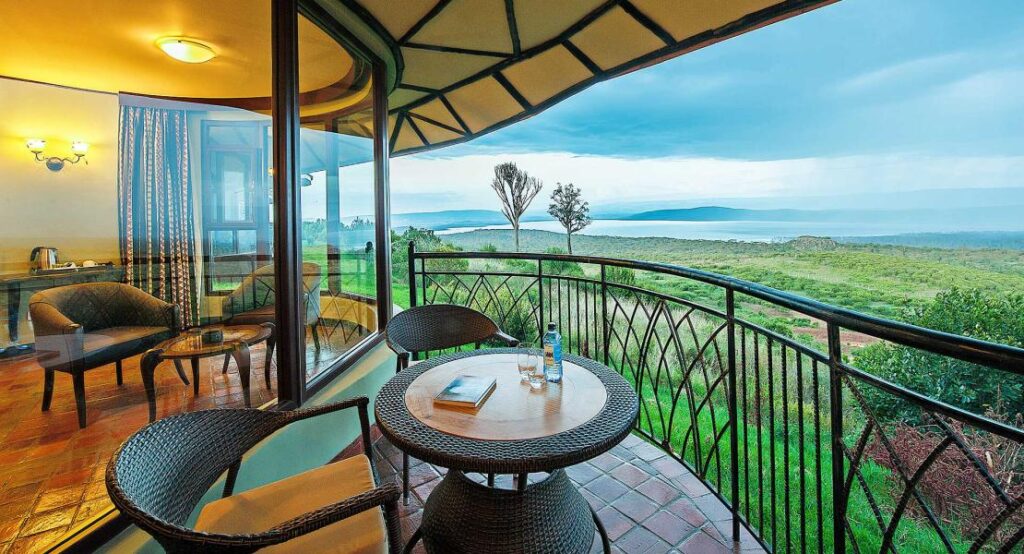
Lodges here sit either within the park boundary or just outside it, all offering easy access to both the rhino sanctuary and the lakeshore.
Select
Lake Nakuru Lodge

Lake Nakuru Lodge (along with Nakuru Sopa Lodge, Nakuru Lion Hill Lodge, and Midland Hotel as further Select-tier options) offers comfortable, full-board accommodation with easy access to the rhino sanctuary and lakeshore game drives.

Before you go

A few practical notes to help you prepare for a Lake Nakuru safari, from what to pack to what to expect on the ground.
What to pack
  • Neutral-toned clothing (khaki, olive, beige) for game drives.
  • A light jacket or fleece for cool mornings — the Rift Valley’s altitude keeps temperatures mild.
  • A wide-brimmed hat, sunglasses, and high-SPF sunscreen.
  • Binoculars — essential for both distant rhino sightings and the lake’s birdlife.
  • A good zoom lens if you’re serious about flamingo photography.
Health & documents
  • A yellow fever vaccination certificate may be required depending on your travel history — check current Kenyan entry requirements before you fly.
  • Malaria risk is generally lower at Nakuru’s higher altitude than at coastal or lowland parks, but consult a doctor about prophylaxis regardless.
  • A valid passport and Kenyan eTA/visa, arranged in advance according to current entry requirements.
  • Travel insurance that explicitly covers safari activities is recommended.
Money & connectivity
  • US dollars (cash, newer notes) and international cards are both commonly used for park fees and lodges — confirm accepted methods with your operator ahead of time.
  • Mobile signal is generally reliable given the park’s proximity to Nakuru town.
  • Tipping guides and lodge staff is customary; ask your operator for typical local guidance.
Getting the most from a visit
  • Head to Baboon Cliff or the Out of Africa Lookout early in your visit for an orientating view over the whole park.
  • Don’t expect guaranteed flamingo numbers — ask your operator or lodge about current lake conditions before you set expectations.
  • Combine with the Maasai Mara or Lake Naivasha for a fuller Rift Valley itinerary.
  • Look for rhinos in the cool morning hours, before they retreat into woodland shade as the day heats up.