Dutch
Dutch Spanish
 French
 Russian
 Chinese
Lake area (54 sq mi)
Elevation — Kenya's highest Rift Valley lake
Bird species recorded
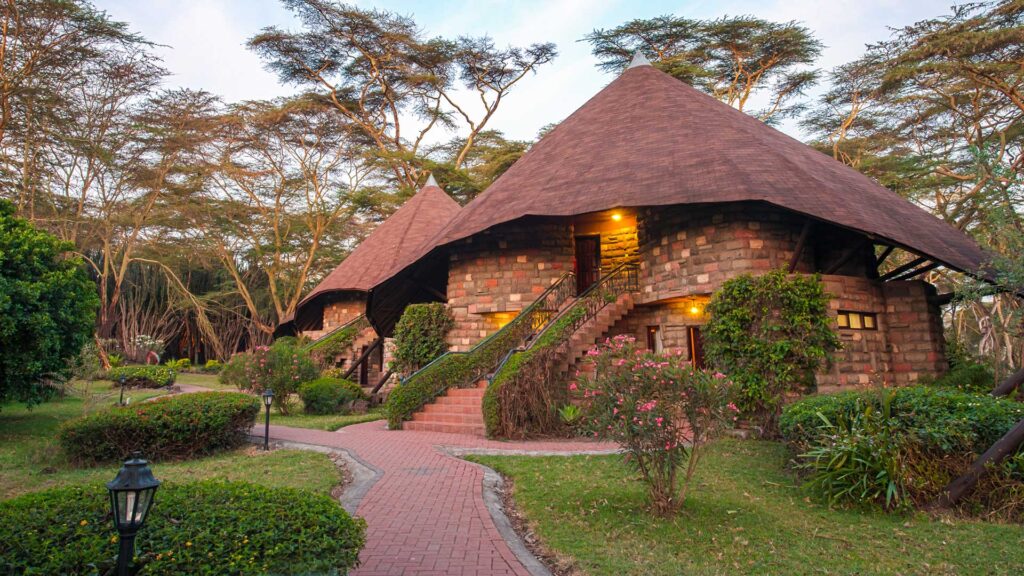
Lake Naivasha lies in Nakuru County, roughly 90–100 km (about a 1.5–2 hour drive) northwest of Nairobi, at 1,884m the highest lake in Kenya’s stretch of the Great Rift Valley. Unlike its alkaline neighbours — Nakuru, Bogoria, Elementaita — Naivasha is freshwater, fed by the perennial Malewa and Gilgil rivers and, unusually for a lake with no visible surface outlet, kept fresh by underground seepage rather than evaporation-driven salt buildup.
The lake’s name comes from the Maasai Nai’posha, “rough water,” a reference to the sudden storms that can sweep across its surface. Its shores have a rich history: it served as a landing point for Imperial Airways flying boats between 1937 and 1950, was home to Born Free author Joy Adamson in the 1960s, and today supports Kenya’s flower-export industry alongside a thriving tourism scene.
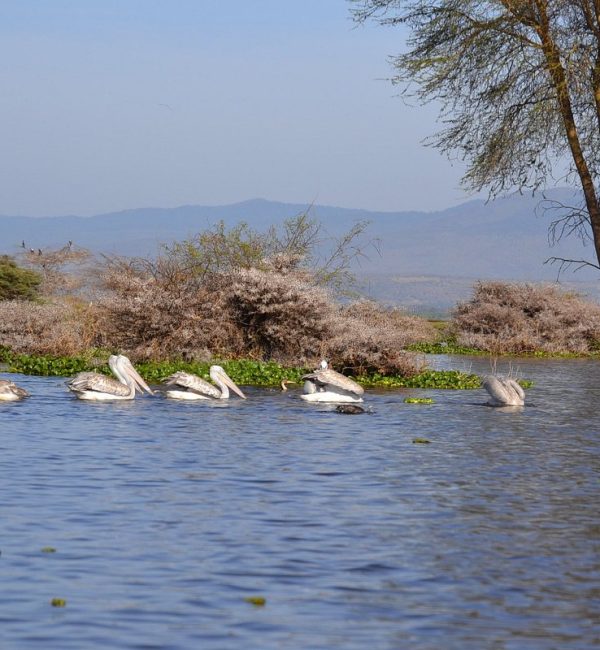
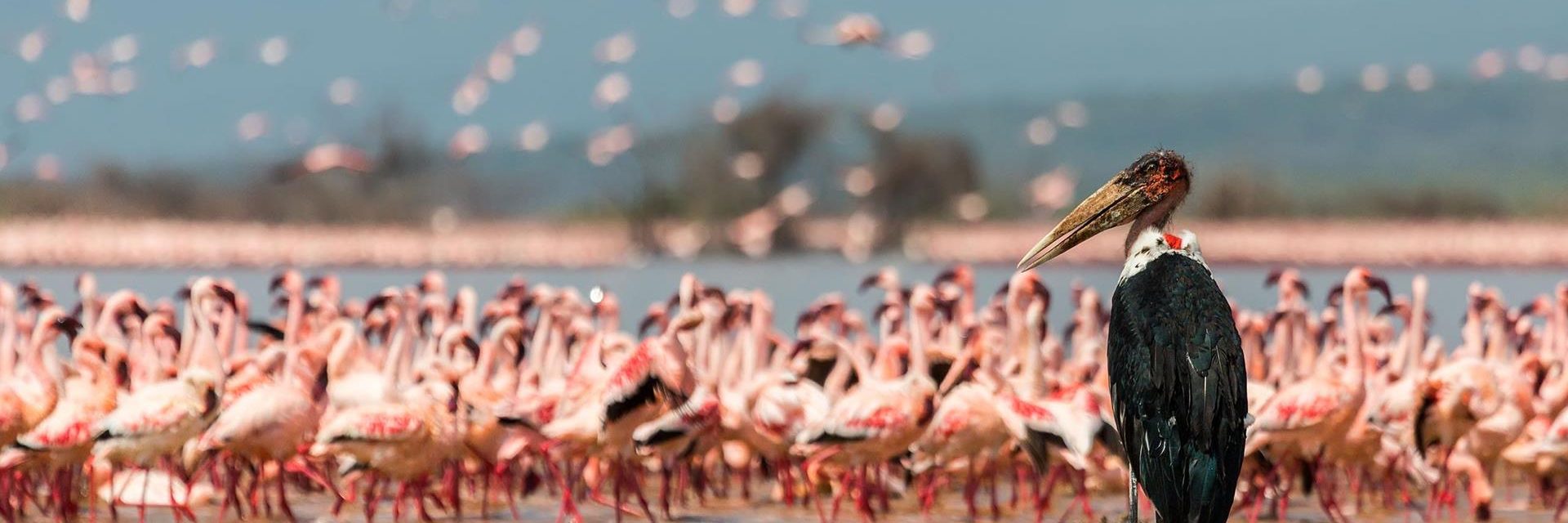
Naivasha offers a genuinely different safari experience from Kenya’s savanna parks: boat safaris past wallowing hippos and diving fish eagles, and walking safaris on predator-free Crescent Island, where giraffe, zebra, and wildebeest can be approached on foot. A Ramsar-listed wetland, the lake and its papyrus swamps support over 400 bird species, joined by migratory visitors between October and March.
Tap a season on the loop to see how conditions shift for boating, birding, and Crescent Island walks.
Warm, mostly dry conditions overlap with the tail end of the October–March migratory bird season, adding extra species to an already rich resident birdlist.
Good to know: hippos leave the water to graze on shore after dark, which is why walking along the lakeshore at night is strongly discouraged — always follow your lodge’s guidance after sunset.
Departure points for boat safaris past wallowing hippos and diving fish eagles, with lakeside lodges offering sundowner terraces over the water.
A predator-free sanctuary reachable only by boat, offering rare walking safaris among giraffe, zebra, and wildebeest.
Bordering the lake, these private conservancies offer night drives and a wider range of wildlife, including leopard, not available on the public lakeshore.
A dramatic volcanic landscape just south of the lake, where visitors can cycle or hike freely among wildlife thanks to the absence of dangerous predators.
| Season | Months | Conditions | Highlights |
|---|---|---|---|
| Dry season / peak | Jul - Oct | Dry and clear — the most reliable boating and photography conditions. | Best paired with a Maasai Mara migration trip in the same window. |
| Short rains | Nov - Dec | Brief afternoon showers. | Migratory birds begin arriving ahead of the main season. |
| Migratory bird season | Jan - Feb | Warm, mostly dry interlude between the rains. | Migratory species remain present, adding to the resident birdlist. |
| Long rains / green season | Mar - May | Heaviest rainfall of the year; the lake and swamp are at their fullest. | Lush scenery and the quietest, cheapest time to visit. |
| Drying out | Jun | Rains easing ahead of the dry season. | Good transitional window with fewer visitors. |